

Promotional gadgets for companies - what to choose to leave a mark after a meeti
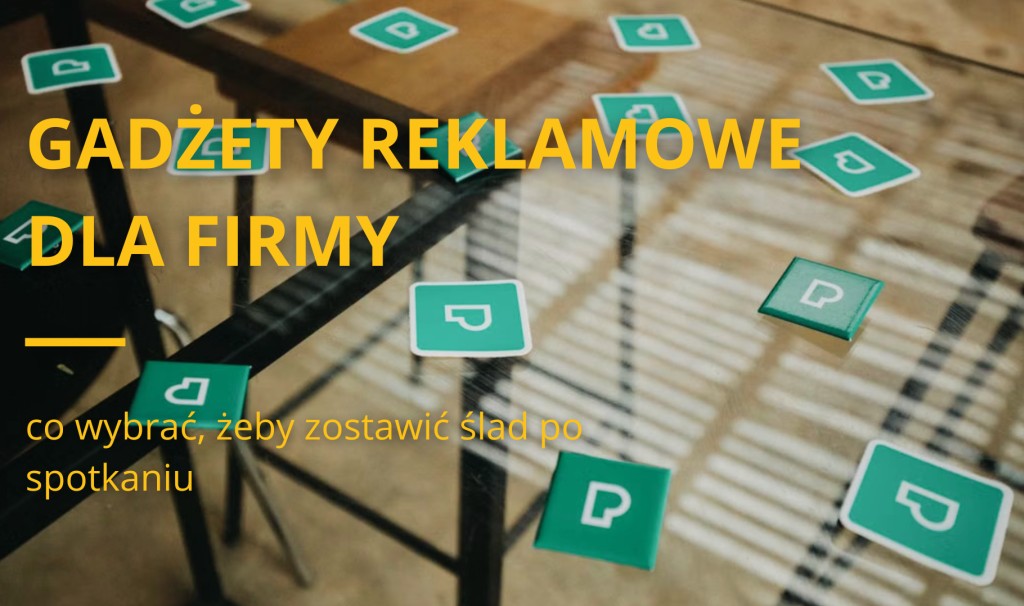
The best promotional gadgets for a company are the ones matched to a specific situation - an event, a trade fair, or a client gift - and made solidly enough that the recipient actually wants to use them instead of throwing them away right after. According to PPAI (Promotional Products Association International) research, 61% of people clearly remember the brand that gave them a promotional item, and 54% still own the last promotional product they received - more staying power than a single digital or outdoor ad exposure delivers. More and more companies are shifting part of their marketing budget toward promotional products, treating them not as a campaign add-on but as a full-fledged marketing channel. A business meeting or a trade fair booth lasts minutes or hours, but a well-chosen gadget keeps working for the brand for weeks, sometimes months, afterward - as long as it meets three conditions: it's useful, well made, and reaches the right person at the right moment. Below, we break this down into concrete decisions: what to choose, for which occasion, and how to organize it without wasting time.
What promotional gadgets should a company choose?
Choosing a promotional gadget should start with answering where and to whom it will be given, because a different product works at a trade fair than as a gift for a key client. Three criteria decide a gadget's effectiveness in practice:
- Usefulness - a product that's genuinely handy (a bag, a power bank, a thermal mug, office accessories) has a much better chance of staying with the recipient than a purely decorative gadget.
- Build quality - PPAI research shows that over 60% of people throw gadgets away specifically because of poor material or build quality, so cutting corners on quality works against the brand, not in its favor.
- Fit with the industry and audience - clothing and sports accessories work differently for a tech company than for a lifestyle or construction brand.
In practice, the most frequently chosen categories are printed t-shirts and hoodies, caps, cotton bags, accessories like power banks or thermal mugs, and outdoor clothing - easy to personalize and versatile enough for most industries.
2026 trends worth considering when choosing
The promotional products market is noticeably shifting, and the "safe" choice of a few years ago (a pen, a notebook) is increasingly giving way to more deliberate solutions:
- Sustainability - recycled, biodegradable, or certified-material products are no longer a niche - they're becoming a client expectation, especially in B2B communication.
- Personalization - the ability to match color, printing technique, or even product form to a specific recipient increases the chance the gadget will be kept and used.
- Phygital - a gadget increasingly serves as a physical call to action: a QR code on the product leads to a landing page, a registration form, or a special offer, linking the physical world with the digital one.
- Functionality over the "wow" effect - recipients expect items that genuinely make everyday life easier, not just ones that look good when unwrapped.
Gadgets for trade fairs and events - what works best?
At trade fairs and events, lightweight gadgets that are visible from a distance and easy to distribute in large quantities work best - bags, caps, lanyards, or clothing with a clear logo. A trade fair booth is an environment where the visitor judges a brand within seconds, so the product needs to communicate what the company does immediately, without further explanation.
Mass distribution vs. selective gifting
When planning event gadgets, it's worth distinguishing between two scenarios, since confusing them is one of the more common budgeting mistakes:
| Scenario | Typical products | Unit budget | Goal |
| Mass distribution (trade fairs, conferences) | Paper/cotton bags, lanyards, pens, badges | Low | Maximum reach, logo exposure |
| Selective gifting (VIPs, speakers, partners) | Outdoor clothing, fleeces, gift sets, premium accessories | Higher | Relationship building, impression of quality |
Outdoor vs. indoor events
The type of event also affects which specific product to pick - at outdoor events (festivals, sports events, outdoor construction fairs), weather-resistant products such as power banks or outdoor clothing work better, while indoor conferences allow more freedom in choosing office accessories or premium textiles. Fulfilling an order within 48 hours matters here regardless of event type - the event date is usually fixed, so production and delivery time can be just as important as the product choice itself.
Gifts for B2B clients - when and what to give?
A gift for a B2B client is best given at moments that naturally strengthen the relationship, not at random, without a specific reason. PPAI research shows that 76% of recipients searched for information about the brand online after receiving a promotional product, and 72% made a purchase from the brand as a result - showing that a well-chosen gift can genuinely support sales, not just brand image.
Concrete occasions for giving a gift
- Signing or renewing a cooperation agreement
- The anniversary of starting cooperation with a client
- Year-end / holiday season
- Launching a new product or service that key clients should know about
- Joint participation in an industry conference or event
Matching the gadget to the relationship level
A new client is best welcomed with a solid product that doesn't require a large investment (e.g., a thermal mug or a premium notebook), while for key, long-term clients, more elaborate gift sets or premium clothing with subtle branding work better - a signal that the company is investing in the relationship, not just in logo exposure.
Gadgets with a logo vs. without - what actually builds the brand?
A gadget with a logo builds brand recognition more effectively than a product without markings, but only when the branding is clear and well designed, since an oversized or aggressive logo works against the intended effect. PPAI research shows that 57% of people remember a brand thanks to a clear logo or name, and 90% of respondents admit that a product's design influences whether they decide to keep it. At the same time, 44% of recipients say they prefer subtle branding over a large, bold logo - meaning more logo doesn't always mean more recall.
| Criterion | Gadget with a visible logo | Gadget without a logo / with subtle branding | Recommendation |
| Brand recognition | High, immediate | Lower, built indirectly through quality | Depends on campaign goal |
| Recipient's willingness to use it | Lower with an oversized logo | Higher - the product feels like "their own" | Subtle branding for premium products |
| Best use case | Trade fairs, mass distribution, events | B2B gifts, presents for VIPs | Match to the gifting context |
| Risk | Recipient perceives it as "advertising," not a gift | Brand is less visible to third parties | Balance - logo present but not dominant |
The gadget as a physical call to action (phygital)
Increasingly, a logo on a gadget isn't the end of the communication but its beginning - a QR code placed on the product can lead to an offer page, a contact form, or video materials about the brand, extending the recipient's contact with the company beyond the moment the product is handed over.
How to order promotional gadgets - a practical guide
Ordering promotional gadgets starts with a quote, which at Feelgood.pl takes about 5 minutes online, with no phone contact required at this stage. The following steps typically make up the process:
- Choosing the product and personalization technique - screen printing, embroidery, DTF, or sublimation, depending on the material, design colors, and order quantity.
- Approving the graphic design - at this stage, it's worth checking how the logo looks at the actual size and placement on the product, not just on the mockup.
- Production - standard orders take up to 48 hours.
- Delivery - scheduled to match the event date or handover date.
When planning an order, it's also worth considering:
- The event or handover date - ordering in advance leaves room for potential design corrections.
- The number of recipients and their grouping (e.g., mass distribution vs. VIP gifts) - this directly determines the budget and product type.
- A printing technique matched to the material - embroidery works better on premium clothing, while screen printing or DTF suits larger runs and simpler designs.
- The option of recurring orders - companies ordering gadgets regularly (e.g., quarterly) can standardize the process and shorten the turnaround time for future orders.
The Feelgood.pl team advises at every stage - from product selection to choosing the printing technique - for companies that want their promotional gadget to genuinely work for the brand, not end up in a drawer.
Eco-friendly promotional gadgets - is this already the standard?
Eco-friendly promotional gadgets are no longer a premium add-on - they're becoming an expectation for a growing share of B2B clients who themselves communicate their environmental responsibility externally. Products made from recycled materials, biodegradable materials, or certified sources (e.g., FSC-certified wood) make it possible to combine brand personalization with a sustainability message, which matters especially in relationships with corporate and institutional clients, where ESG policy also influences the choice of suppliers and partners. Feelgood.pl offers ECO products in this segment as a permanent part of its range, not an occasional line - making it possible to include them in a standard order without having to look for a separate supplier.
FAQ
1. How much do promotional gadgets for companies cost?
The price depends on the product type, personalization technique, and order size - the larger the quantity, the lower the unit cost. An exact quote can be obtained online in about 5 minutes, with no phone contact required.
2. What gadgets work best for trade fairs and conferences?
Lightweight products that are easy to distribute in large numbers work best: bags, caps, lanyards, and clothing with a clear logo, visible from a distance at a booth. At outdoor events, it's also worth choosing weather-resistant products.
3. Are promotional gadgets effective in B2B?
Yes - PPAI research shows that 76% of recipients searched for information about the brand online after receiving a promotional product, and 72% made a purchase as a result, making gadgets a genuine sales support tool, not just a brand-image exercise.
4. What is the minimum order quantity for gadgets with a logo?
The minimum quantity depends on the specific product and printing technique - some items can be ordered in small quantities, while others (e.g., embroidery) require a larger run to keep the unit cost reasonable.
5. What printing techniques are available for promotional gadgets?
Feelgood.pl offers screen printing, embroidery, DTF, and sublimation - the choice depends on the material, design colors, and order size.
6. How quickly can an order of gadgets with a logo be fulfilled?
Standard fulfillment takes up to 48 hours, which matters especially for orders tied to a specific event or meeting date.
7. Can promotional gadgets be eco-friendly?
Yes - the range includes ECO products as a permanent part of the offer, making it possible to combine brand personalization with a message about environmental responsibility.
8. What is "phygital" in the context of promotional gadgets?
It's the combination of a physical product with a digital action - e.g., a QR code on the gadget leading to an offer page, a form, or brand materials, extending the recipient's contact with the company beyond the moment of handover.
9. How should a company match a promotional gadget to a client's industry?
It's worth being guided by the nature of the recipients' work and values - e.g., outdoor clothing and sports accessories work well for physically active clients, technology and office accessories suit corporate companies, and ECO products fit clients who strongly communicate sustainability.
Search
Newsletter